Long read · English
Forex Stop Loss Placement Techniques
Forex Stop Loss Placement Techniques: a practical, no-hype guide for readers from Forex Trader Secrets.
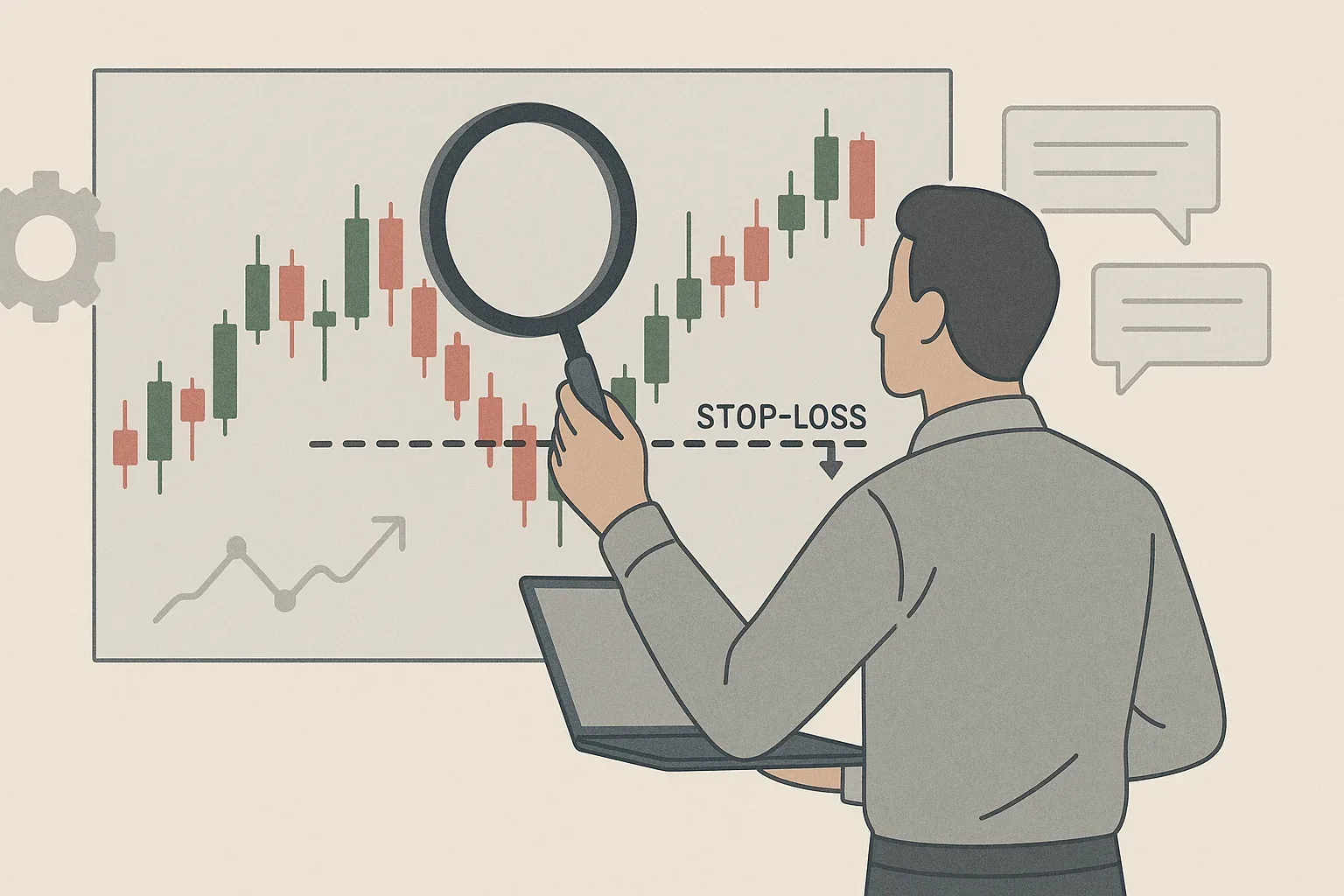
Yet, for many traders, placing a stop loss remains a mechanical action rather than a strategic decision.
The Unshakeable Foundation: Why Forex Stop Losses Are Essential for Survival
Without a stop loss, a single adverse market movement or unexpected event can swiftly decimate an entire trading account, especially when using leverage. The primary risks it mitigates are unlimited downside exposure, emotional decision-making, and the erosion of trading capital. When you place a stop loss, you pre-define your maximum acceptable loss on a trade, turning potential disasters into manageable setbacks. This systematic approach removes the emotional burden of having to decide when to exit a losing trade, preventing the common pitfalls of hope (waiting for a reversal that never comes) or fear (closing a trade prematurely). For example, if you buy EUR/USD at 1.1000 and place a stop loss at 1.0950, you know your maximum loss is 50 pips. If the market moves against you beyond this point, your trade is automatically closed, protecting you from further depreciation. This discipline is fundamental to capital protection, allowing you to survive periods of market uncertainty and remain in the game long enough to refine your strategy and experience profitable trades.
Understanding the Core Principles of Effective Stop Loss Placement
Effective stop loss placement is not about guessing. It's about strategic positioning based on clear principles. The core idea is to place your stop loss at a point where, if hit, your original trade hypothesis is definitively invalidated. This means your stop loss should be in a logical location that the market is unlikely to breach if your trade is going to be successful. Key principles include: respecting market structure, accounting for volatility, and aligning with your personal risk tolerance. Market structure refers to identifiable patterns in price action, such as support and resistance levels, trendlines, or previous swing highs/lows. A stop loss should logically sit beyond such structures. Volatility dictates the "breathing room" your trade needs; a stop loss placed too tightly in a volatile market will be prematurely triggered by normal price fluctuations. Finally, your risk tolerance, often expressed as a percentage of your account balance you're willing to risk per trade (e.g., 1-2%), determines the maximum dollar amount your stop loss can represent. They differ primarily in how they define the "logical point" for your exit, offering a spectrum of approaches to suit various trading styles and market conditions. These methods are essential for proper forex position size calculation, ensuring your risk is always managed.
Technical Analysis-Driven Stop Loss Placement Strategies (Support/Resistance, Trendlines, Chart Patterns)
Technical analysis-driven stop loss placement is among the most popular and logical approaches, allowing traders to use market structure to define their risk. Traders can effectively use technical analysis like support and resistance levels, trendlines, and chart patterns to determine precise stop loss levels. If you are entering a long trade (buying) near a support level, your stop loss should typically be placed just below that support level. The rationale is that if the price breaks decisively below support, your bullish thesis is invalidated. Conversely, for a short trade (selling) near resistance, your stop loss would be placed just above the resistance level. When trading with a trend, you can use Trendlines for stop loss placement. If buying in an uptrend, place your stop loss below the rising trendline. If selling in a downtrend, place it above the falling trendline. A break of the trendline suggests a potential change in trend, invalidating your trade. Many Chart Patterns, such as triangles, head and shoulders, or double tops/bottoms, offer clear invalidation points. For instance, in a bullish flag pattern breakout, your stop loss could be placed below the flag's support level. If trading a double bottom, the stop loss would typically go below the lowest point of the second bottom. For Swing Highs/Lows, placing a stop loss beyond a recent swing high (for short trades) or swing low (for long trades) is a common strategy. These points represent significant market turns, and a breach often indicates a shift in market sentiment. The effectiveness of these methods lies in their logical alignment with price action. They define a point where the market, by moving past it, tells you your initial analysis was incorrect, signaling a need to exit the trade to protect capital.
Volatility-Based Stop Loss Techniques: Using ATR and Standard Deviation for Dynamic Protection
This prevents your stop loss from being too tight in volatile conditions (leading to premature exits) or too wide in quiet markets (increasing unnecessary risk). Volatility measures like Average True Range (ATR) directly inform dynamic stop loss placement to better suit current market conditions. Average True Range (ATR) measures the average range of a currency pair over a specified period (e.g., 14 periods). A higher ATR indicates greater volatility, suggesting wider stop losses are needed, while a lower ATR indicates less volatility, allowing for tighter stops. To use ATR for stop loss placement, you can multiply the current ATR value by a factor (e.g., 1.5x, 2x, or 3x) and place your stop loss that many ATRs away from your entry price. For a long trade, your stop would be Entry Price - (X ATR). For a short trade, it would be Entry Price + (X ATR). The multiplier 'X' depends on your trading style and timeframe; day traders might use a smaller multiplier, while swing traders might use a larger one. This method ensures your stop loss gives the trade enough room to fluctuate within normal market noise without being stopped out prematurely. Similar to ATR, Standard Deviation measures how dispersed data points (in this case, price movements) are from the average. A higher standard deviation suggests higher volatility. Traders can use Bollinger Bands, which are derived from standard deviation, to place stops. For a long trade, a stop loss might be placed just below the lower Bollinger Band, or for a short trade, above the upper Bollinger Band. The Bands dynamically expand and contract with volatility, providing adaptive stop levels. Both ATR and standard deviation offer a more intelligent way to place stop losses than fixed pips, as they ensure your stop is always proportionate to the market's current character. This protects against the common issue of using a one-size-fits-all stop loss that might be appropriate in one market but completely unsuitable in another, thereby strengthening your forex trading capital protection.
Percentage and Fixed Pips Stop Loss Methods: Simplicity and Risk Control
The Percentage-Based Stop Loss method involves defining your stop loss based on a fixed percentage of your total trading capital you are willing to risk on a single trade. The industry standard recommendation for most traders is to risk no more than 1-2% of your account balance per trade. To implement this, you first calculate the maximum dollar amount you're willing to lose (e.g., 1% of a $10,000 account is $100). Then, based on your entry point and a technically derived stop loss level (from support/resistance, ATR, etc.), you determine the number of pips that loss represents. Finally, you use this pip distance and your maximum dollar risk to calculate your position size using a forex position size calculation, ensuring that if the stop loss is hit, you only lose your predefined percentage of capital. This method inherently links your stop loss to your overall risk management strategy, making it a cornerstone of sustainable trading habits. Its strength lies in its explicit control over capital preservation, irrespective of the currency pair or volatility. The Fixed Pips Stop Loss is the simplest method, where you define a fixed number of pips for every stop loss, regardless of the currency pair, timeframe, or market conditions. For example, a trader might decide to use a 30-pip stop loss on every trade. While simple to apply, its primary drawback is its lack of adaptability. A 30-pip stop might be too wide for a quiet market or too tight for a highly volatile one, leading to premature exits or unnecessarily large losses. However, for beginner traders with a consistent strategy on a specific pair, it can offer a basic level of discipline. It’s often combined with a strict risk-reward ratio, such as always aiming for a 60-pip take profit with a 30-pip stop (1:2 ratio). While less sophisticated than volatility or technical analysis-driven methods, it serves as an entry point into stop loss discipline for those who prioritize simplicity.
Time-Based and Trailing Stop Loss Strategies: Adapting to Market Evolution
Time-based and trailing stop loss strategies provide dynamic ways to adapt to market evolution, offering methods to manage risk and protect profits as a trade progresses. The Time-Based Stop Loss, a less common but valuable strategy, dictates that if a trade has not moved in your favor or reached its target within a predefined timeframe, you close it. For example, a day trader might decide that if a trade hasn't shown significant movement after four hours, they will exit, regardless of price action or whether the initial stop loss has been hit. The rationale is that if a trade is stagnant, it's tying up capital that could be deployed elsewhere, and the initial thesis might be weakening. This method helps avoid prolonged exposure to whipsaw markets and keeps your capital actively working. It encourages efficiency and prevents holding onto losing or stagnant positions out of hope. A Trailing Stop Loss is designed to protect profits by automatically moving your stop loss level as the market moves in your favor. If you are in a long trade, a trailing stop will move higher when the price goes up, but it will not move lower if the price falls. It essentially "locks in" profits as the trade progresses. Trailing stops can be set in pips (e.g., 20 pips behind the current price), as a percentage of the price movement, or based on technical indicators like a moving average or ATR. For instance, you might set a trailing stop to always be 1.5 times the current ATR below the highest price reached since entry. The benefit is that it allows a winning trade to run and capture larger profits while simultaneously protecting against a complete reversal. It automatically adjusts to market evolution, allowing traders to participate in extended trends without constantly monitoring the market to manually move their stop. This is a powerful tool for forex trading capital protection, especially in trending markets.
Choosing the Optimal Stop Loss Technique for Your Trading Style and Market Conditions
Choosing the optimal stop loss technique is not a one-size-fits-all decision; it depends heavily on your specific trading style, timeframe, and risk tolerance. What works for a scalper will likely not work for a swing trader, and vice versa. Regarding Trading Style: Scalpers often use very tight, fixed pips or extremely small percentage-based stops due to their short term focus and high frequency of trades. Their primary goal is to capture tiny price movements, and they must exit quickly if the market moves against them. Day Traders tend to combine technical analysis (support/resistance, minor swing points) with volatility-based stops (e.g., 1-2x ATR) to account for intraday price swings. Time-based stops can also be useful here to close trades before the end of the trading day. Swing Traders rely heavily on technical analysis (major support/resistance, trendlines, chart patterns) and wider volatility-based stops (2-3x ATR) to give their trades room to breathe through daily fluctuations. Trailing stops are excellent for protecting profits on longer-duration trades. Position Traders use the widest stops, often based on long term support/resistance or fundamental shifts, with very large ATR multiples, as they hold trades for weeks or months. Trailing stops are almost essential for this style. For Timeframe: Shorter timeframes (e.g., 5-minute chart) demand tighter stops due to rapid price action, while longer timeframes (e.g., daily chart) require wider stops to accommodate larger price swings and avoid noise. A conservative trader might use a 1% risk per trade, dictating a smaller position size for a given stop loss distance. An aggressive trader might go up to 2% or 3%. Regarding Market Conditions: A trending market might favor trailing stops and technical analysis-based stops. A ranging or consolidating market might require tighter stops around the consolidation boundaries. Highly volatile markets demand wider volatility-based stops. For example, you might identify a logical technical level for your stop loss and then adjust its distance based on current ATR to ensure it's not too tight or too wide for the market's current volatility, all while adhering to your 1-2% risk per trade rule.
Common Stop Loss Placement Mistakes and How to Avoid Them
Even experienced traders can fall prey to common stop loss placement mistakes, which can significantly undermine their trading performance. Not Using a Stop Loss at All is perhaps the gravest error, exposing your entire capital to unlimited risk. Many beginner traders avoid stops out of fear of being stopped out or hope that the market will eventually turn. Strategy: Always, without exception, place a hard stop loss with every trade entry. Treat it as a non-negotiable part of your trading plan. Placing Stops Too Tight: Setting a stop loss too close to your entry point, often to achieve a higher risk-reward ratio, results in being "whipsawed" out of trades by normal market noise before the price has a chance to move in your intended direction. Strategy: Use volatility-based methods like ATR, or place your stop beyond logical technical levels (support/resistance, swing points) with a small buffer. Give your trade room to breathe. Conversely, Placing Stops Too Wide means you risk an unacceptably large portion of your capital if the trade goes wrong. This often stems from a fear of being stopped out or a desire to avoid smaller losses. Strategy: Always calculate your position size based on your chosen stop loss distance and your maximum risk percentage (e.g., 1-2% of account). If a wide stop implies risking more than your acceptable percentage, either reduce your position size or don't take the trade. Moving a Stop Loss Against Your Position ("Chasing the Market"): This emotional mistake happens when a trade moves against you, and instead of accepting the loss, you move your stop loss further away, hoping for a reversal. This can turn a small, manageable loss into a catastrophic one. Strategy: Never move a stop loss against your initial entry point. Once a stop loss is placed, it should only be moved to protect profits (trailing stop) or to break even. Placing Stops at Obvious Round Numbers: Many traders place stops exactly at 1.1000, 1.2500, etc. Market makers and institutional traders are aware of these levels and often target them for liquidity, leading to "stop hunts" that can prematurely trigger your stop loss before the market reverses. Strategy: Place your stop loss a few pips beyond these obvious levels, creating a buffer. For instance, if resistance is at 1.1000, place your stop at 1.1005 or 1.1010. Ignoring Risk-Reward Ratio: Entering trades without considering the potential profit against the potential loss can lead to strategies where winning trades cannot offset losing ones. Strategy: Always aim for a favorable risk-reward ratio (e.g., 1:2 or 1:3 minimum) before entering a trade. By being mindful of these common errors and consciously implementing preventive strategies, traders can significantly improve the effectiveness of their stop loss placement and overall risk management, safeguarding against forex trading leverage risks.
Mastering Stop Loss Management: Adjusting, Scaling, and Advanced Considerations
Mastering stop loss management goes beyond initial placement; it involves dynamically adjusting, scaling, and incorporating advanced considerations as a trade evolves. This active management is key to maximizing profits while continually minimizing exposure. Adjusting to Break-Even: Once a trade moves significantly in your favor (e.g., by the distance of your initial stop loss), consider moving your stop loss to your entry price or slightly above/below it to cover commission/spread. This move ensures that the trade becomes "risk-free" in terms of capital, as you can no longer lose money on it. This is a common practice for most professional traders. You can trail manually by moving your stop below successive swing lows (for long trades) or above swing highs (for short trades), or use an automated trailing stop based on a fixed number of pips, a percentage, or a multiple of ATR. For instance, you might set a trailing stop to always be 1.5 times the current ATR below the highest price reached since entry. This allows you to capture more of a trend without manual intervention. Scaling In/Out of Positions: This advanced technique involves adding to a winning position (scaling in) or taking partial profits (scaling out). When scaling in, you might adjust your overall stop loss to account for the new average entry price, ensuring your total risk remains within your acceptable percentage. When scaling out, you might move your stop to break even on the remaining portion of the trade, effectively locking in profit on the closed part. Partial Profit Taking: Instead of closing the entire trade at the final take-profit level, some traders will take off a portion of their position (e.g., 50%) at an initial target. Once partial profits are taken, they will often move the stop loss for the remaining position to break-even or a profitable trailing stop, securing some gains while allowing the rest of the trade to run. Understanding "Mental Stops" vs. "Hard Stops": A hard stop loss is an actual order placed with your broker. A mental stop is a price level you decide you will exit at, but without placing an order. Always use hard stops. Mental stops are unreliable because emotions, internet issues, or sudden market moves can prevent you from executing the exit as planned. Hard stops ensure execution regardless of your emotional state or external factors. News Event Considerations: During major news releases, market volatility can spike dramatically, leading to wider spreads and increased slippage. Consider closing positions or widening stops significantly before high-impact news if your strategy isn't built for such events. Alternatively, some traders opt to simply avoid trading during these periods. Mastering stop loss management is an iterative process. Regularly review your trades in a trading journal to identify patterns in how your stops perform and refine your techniques. Consistency, discipline, and adaptability are the hallmarks of effective stop loss management.
Why is a stop loss order absolutely critical for forex traders, and what risks does it mitigate?
It mitigates the risks of catastrophic capital depletion, reduces emotional decision-making by pre-defining maximum acceptable loss, and prevents the erosion of trading capital from unchecked adverse market movements.
What are the distinct categories of stop loss placement techniques (e.g., technical, volatility, fixed) and how do they differ?
Distinct categories of stop loss placement techniques include technical analysis-driven, volatility-based, percentage-based, fixed pips, and time-based/trailing methods. They differ primarily in how they determine the optimal exit point: technical methods use chart patterns like support/resistance, volatility methods adapt to market choppiness (e.g., using ATR), percentage-based define risk as a fraction of capital, fixed pips use a set distance, and time-based/trailing adjust dynamically as a trade evolves or protect profits.
How can traders effectively use technical analysis (like support/resistance or trendlines) to determine precise stop loss levels?
Traders effectively use technical analysis to determine stop loss levels by placing them just beyond key market structures. For instance, in a long trade, a stop loss is set just below a clear support level or an ascending trendline. For a short trade, it's placed just above a resistance level or a descending trendline. Chart patterns like double bottoms or head and shoulders also provide natural invalidation points (e.g., below the lowest point of a double bottom). A breach of these levels indicates the trade hypothesis is likely incorrect.
How do volatility measures like Average True Range (ATR) inform dynamic stop loss placement to better suit current market conditions?
Volatility measures like Average True Range (ATR) inform dynamic stop loss placement by adjusting the stop's distance according to current market choppiness. ATR quantifies average price movement over a period; a higher ATR implies greater volatility, requiring a wider stop loss to avoid premature exits from normal price fluctuations. Traders typically multiply the ATR value by a factor (e.g., 1.5x to 3x) and place their stop loss that many ATR units away from their entry, ensuring the stop has sufficient "breathing room" tailored to prevailing market conditions.
What factors should a trader consider when choosing the most appropriate stop loss technique for their specific trading style, timeframe, and risk tolerance?
When choosing a stop loss technique, a trader should consider their trading style (scalping, day, swing, position), as different styles require varying stop distances. The timeframe of the trade dictates whether tighter or wider stops are appropriate. Crucially, personal risk tolerance (e.g., 1-2% of capital risked per trade) determines the maximum dollar loss and, consequently, the acceptable stop loss distance for a given position size. Market conditions (trending vs. ranging, high vs. low volatility) also influence the choice, often favoring hybrid approaches.
What are the most common mistakes traders make when placing stop losses, and what strategies can prevent them?
Common stop loss mistakes include not using a stop loss at all (prevent by always placing a hard stop), placing stops too tight (prevent with volatility-based or buffered technical stops), placing stops too wide (prevent with strict position sizing), moving stops against a position (never move against entry, only to protect profit or break-even), placing stops at obvious round numbers (prevent by adding a few pips buffer), and ignoring the risk-reward ratio (always aim for a favorable ratio before entry).
In the dynamic and often unpredictable world of forex trading, the diligent application of stop loss placement techniques is not merely a recommendation; it is a fundamental requirement for survival and sustained success. By moving beyond basic placement to a strategic framework that considers your trading style, risk tolerance, and prevailing market conditions, you transform your stop loss from a simple risk mitigation tool into a powerful component of your overall trading strategy. From leveraging technical analysis and adapting to volatility with ATR, to employing percentage-based risk control and dynamic trailing stops, each technique offers a unique advantage. Understanding common pitfalls and actively managing your stops, adjusting to break-even, trailing profits, and considering advanced scaling, will solidify your approach. For more insights into safeguarding your trading capital, explore our articles on https://forextradersecrets.net/blog/forex-risk-management-basics and https://forextradersecrets.net/blog/forex-trading-capital-protection. We also emphasize the importance of verifying your broker's regulation, which you can learn more about at https://forextradersecrets.net/blog/verify-forex-broker-regulation. Please note that all trading with leverage carries a high risk of capital loss.